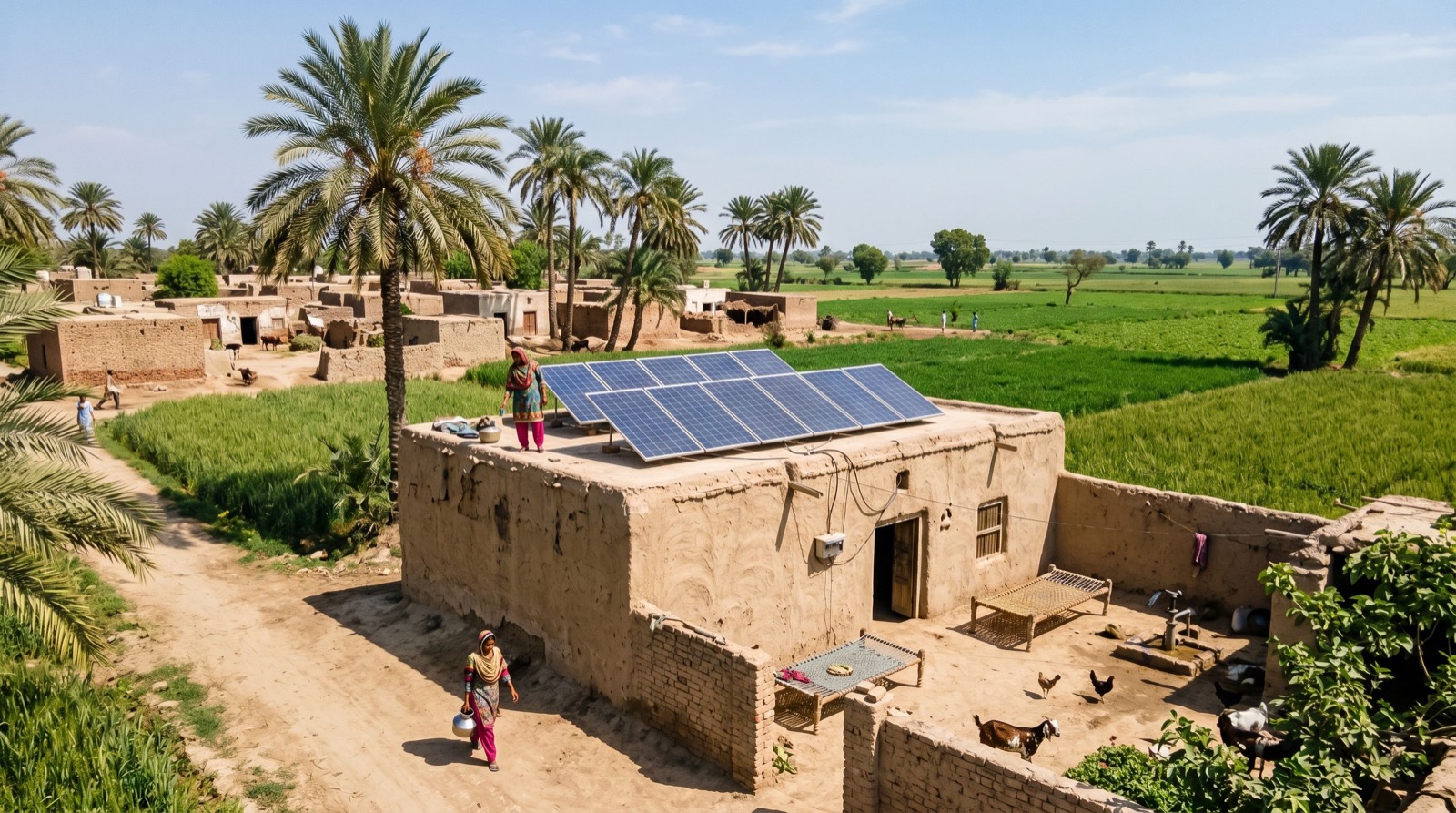
How to Buy Solar Panels in Pakistan: A 2026 Buyer’s Checklist
Electricity tariffs keep climbing, load-shedding still bites in summer, and net-metering rules have matured. That combination is exactly why so many households and businesses now want to buy solar panels in Pakistan before the next billing shock arrives. The good news is that the market has never been more competitive, and prices per watt have fallen sharply over the last few years. The tricky part is separating genuine value from marketing noise.
This guide walks you through the decisions that actually matter in 2026: panel technology, sizing, warranties, and the paperwork that protects your investment. Read it once and you will shop like an engineer, not a guesser.
Why buying solar panels in Pakistan makes sense in 2026
The economics have shifted decisively. A rooftop system that once took eight or nine years to pay for itself now commonly returns its cost in four to six years, depending on your consumption pattern and city. With net metering, the surplus units you export during the day offset the units you import at night, which flattens your bill instead of just trimming it.
There is also an energy-security angle. Pakistan enjoys some of the highest solar irradiance in the region, averaging roughly 5.3 kWh per square metre per day across much of the country. That means a well-oriented rooftop generates serious output for most of the year, and the fuel is free.
Grid-tied, hybrid, or off-grid?
- Grid-tied: cheapest, works with net metering, but shuts off during a blackout for safety.
- Hybrid: adds a battery so essential loads keep running when the grid drops. Most popular choice for homes in 2026.
- Off-grid: fully independent, best for farms and remote sites with no reliable WAPDA connection.
Panel technology: what to compare before you buy solar panels in Pakistan
Almost every serious residential installation today uses monocrystalline panels, and increasingly bifacial or half-cut cell designs. These convert more sunlight per square metre, which matters when roof space is limited. Polycrystalline panels are cheaper but noticeably less efficient, so they only make sense on large flat roofs where space is not a constraint.
Look at three numbers on any datasheet: rated power (watts), module efficiency (%), and the temperature coefficient. In our hot climate, a lower (better) temperature coefficient means the panel loses less output on a 45°C afternoon in Multan or Jacobabad. That single spec quietly separates premium panels from budget ones.
Comparison of common panel types
| Panel type | Typical efficiency | Best for | Relative cost |
|---|---|---|---|
| Monocrystalline (half-cut) | 20–22% | Homes, limited roof space | Medium–High |
| Bifacial mono | 21–23% | Ground mounts, white roofs | High |
| Polycrystalline | 15–17% | Large flat roofs, tight budgets | Low |
| Thin-film | 10–13% | Specialty/curved surfaces | Low–Medium |
Sizing your system correctly
Oversizing wastes money; undersizing leaves you buying expensive grid units anyway. Start with your last 12 months of bills and find your average monthly consumption in units (kWh). A rough rule for Pakistan’s sun hours: every 1 kW of panels produces about 4–4.5 units per day on average across the year.
- Add up your yearly units and divide by 365 to get daily consumption.
- Divide daily consumption by 4 to estimate the kW of panels you need.
- Add 15–20% headroom for future appliances, cloudy stretches, and panel ageing.
For example, a home using 900 units a month burns roughly 30 units a day, which points to a 7–8 kW system once you add headroom. Getting this step right is where a good installer earns their fee.
Warranties, certifications, and paperwork
A solar panel is a 25-year purchase, so the warranty is not a footnote — it is the product. Expect a product (workmanship) warranty of 12–15 years and a performance warranty guaranteeing roughly 85–87% output at year 25. Insist on manufacturer documentation, not just a shop stamp.
Check that modules carry IEC 61215 and IEC 61730 certification, which cover durability and safety. The U.S. Department of Energy’s guidance on planning a home solar system is a solid neutral reference for understanding these standards and system components before you commit.
Net metering documents you will need
- Copy of a recent electricity bill and CNIC.
- Sanctioned load and a three-phase connection for larger systems.
- An application to your DISCO (LESCO, K-Electric, IESCO, etc.) for the net-metering agreement.
Choosing a supplier you can trust
Hardware is only half the story; installation quality decides how long your system lasts. Poor wiring, weak mounting structures, and undersized cables cause most early failures. That is why buyers increasingly prefer working with reliable local experts who handle design, approvals, and after-sales service under one roof rather than stitching together parts from three different vendors.
Ask any prospective vendor for recent installation photos, references in your city, and a written performance estimate. A confident, transparent supplier — ideally one recognised as a best solar company in Pakistan — will happily provide all three and explain the trade-offs in plain language.
How much should you budget?
Prices move with the dollar and global module supply, but in 2026 a quality grid-tied residential system typically lands in a predictable per-watt band, with hybrid systems costing more because of the battery. Rather than chasing the lowest sticker price, compare total cost of ownership: warranty length, inverter quality, and installation workmanship all affect the real cost per unit generated over 25 years.
Frequently Asked Questions
How long do solar panels last in Pakistan’s climate?
Quality monocrystalline panels are built for 25–30 years of service. Output slowly declines by roughly 0.5% a year, so even at year 25 a good panel still delivers around 85% of its original power if it was installed and maintained properly.
Do I need batteries to buy solar panels in Pakistan?
No. A grid-tied system with net metering works without batteries and is the most cost-effective option. Batteries add backup during outages, so choose a hybrid setup only if uninterrupted power matters to you.
Will solar panels work during load-shedding?
A pure grid-tied system switches off during a blackout for safety. If you want power to continue during outages, you need a hybrid inverter with a battery or a system designed for backup operation.
How much roof space do I need?
As a rule of thumb, every 1 kW of modern panels needs about 55–65 square feet of shade-free roof. A 7 kW home system therefore needs roughly 400–450 square feet oriented toward the south.
Final thoughts before you buy
When you set out to buy solar panels in Pakistan in 2026, let data drive the decision: size from your real consumption, compare efficiency and temperature coefficients, demand proper warranties, and vet the installer as carefully as the hardware. Do that, and your rooftop becomes a quiet, decades-long hedge against rising tariffs. Request a written proposal, confirm the net-metering pathway, and only then sign. Your future self, reading a much smaller electricity bill, will thank you.