
The Meter That Runs in Both Directions
Almost every electricity meter in Pakistan knows how to count only one way: upward, toward a larger bill. A net metering connection changes that arrangement entirely. Once your distribution company installs a bidirectional meter, every unit your rooftop panels push into the grid during the day is recorded as a credit, and every unit you draw back at night is recorded as a debit. At the end of the billing month, the two totals are set off against each other and you pay only for the difference.
The idea is straightforward, yet a surprising number of households that install solar never complete the process. Some are discouraged by the paperwork, some receive half-baked advice from whoever sold them the panels, and many simply never learn that the option exists at all. What follows is a plain-language tour of the mechanics, the eligibility rules and the arithmetic, so you can judge whether the effort makes sense for your own roof.
How the Billing Arithmetic Works
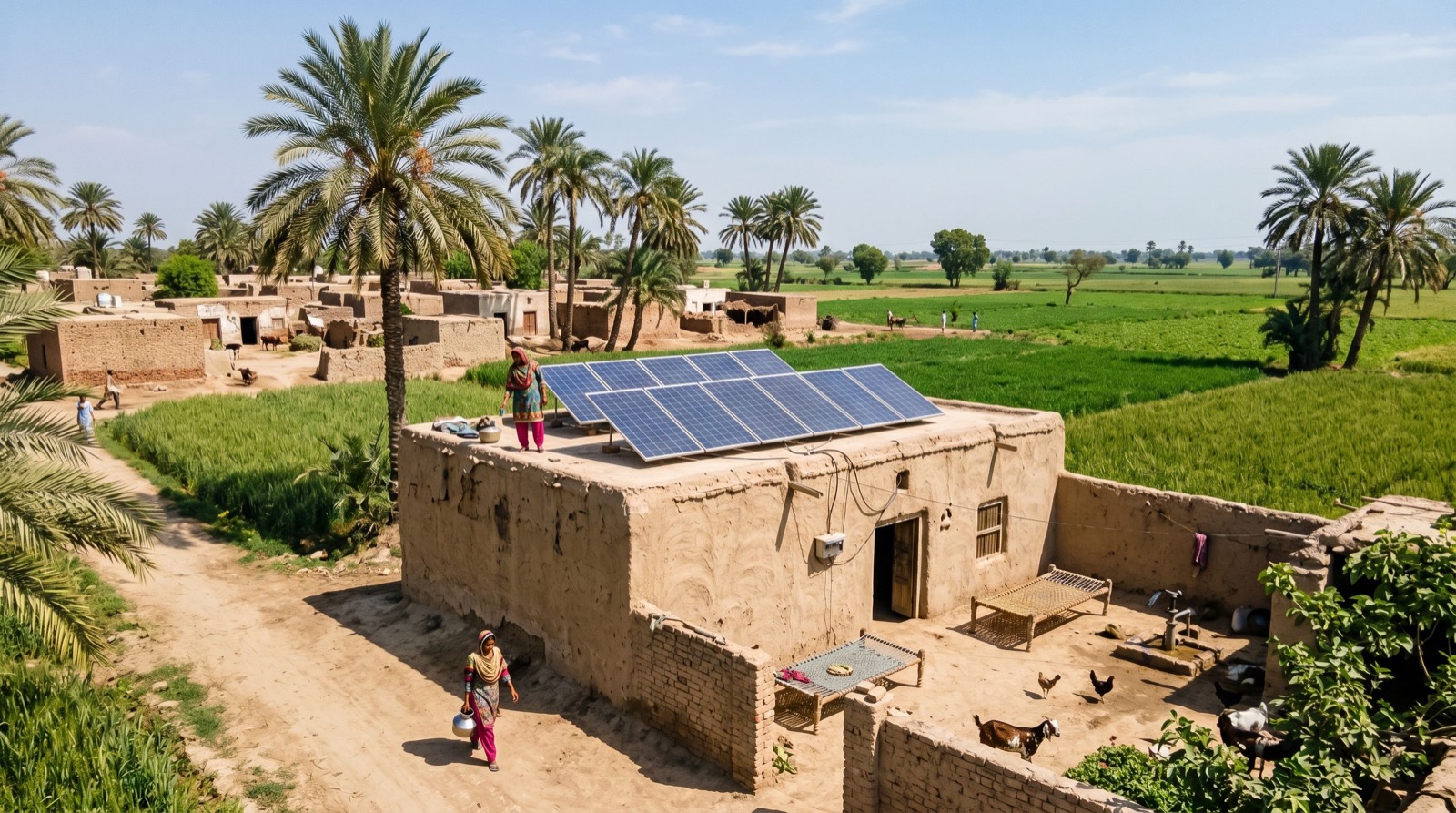
Picture a 10 kW array on a house in Punjab. On a clear day it may generate 45 to 50 units, of which the household itself consumes perhaps 15 during daylight hours. The surplus flows out through the bidirectional meter into the neighbourhood grid, quietly powering the homes around you. After sunset, the house pulls electricity back from the grid exactly as it did before solar arrived.
When the bill is prepared, imported units are tallied against exported units. Import 600 and export 550, and you are charged for 50. Export more than you import, and the surplus rolls forward as a credit against future months. At periodic settlement points the utility pays out any accumulated surplus at an approved rate — but that rate sits below the retail tariff you pay for imported power, a gap that has widened under recent policy revisions and that should directly shape how large a system you decide to buy.
Who Qualifies Under the Rules
Net metering operates under NEPRA’s distributed generation framework. To apply you need a three-phase connection, a system rated between 1 kW and 1 MW, and equipment that meets the approved specifications — most critically a grid-tied or hybrid inverter with anti-islanding protection, which cuts exports automatically the moment the grid fails so that line workers are never exposed to a live feed coming down from your roof.
Your sanctioned load matters too. Distribution companies typically approve systems only up to a defined multiple of the load written on your connection documents, so a house with a modest sanctioned load may need a load enhancement before a large array can clear review. A thorough solar company in Pakistan will verify these details during the initial survey rather than leaving you to discover the mismatch after the panels are already bolted down.
The Application, Step by Step
Timelines differ from one distribution company to another, but a typical residential file moves through this sequence:
- Submit the application to your distribution company along with your latest bill, CNIC copy and full system specifications.
- Host a site survey where officials confirm the connection type, sanctioned load and existing metering arrangement.
- Receive initial approval and pay the prescribed fees for the bidirectional meter.
- Have the installer complete wiring, earthing and protective devices to the inspector’s standard.
- Pass the inspection, including witness testing of the anti-islanding function.
- Sign the agreement or licence documents required for your system size.
- Wait for the bidirectional meter to be installed and commissioned, after which every exported unit starts earning credit.
Keep photocopies and scans of every document you submit, and note the reference number of your file. Polite, persistent follow-up at the sub-division office moves paperwork noticeably faster than waiting for the system to remember you.
What Exported Units Are Really Worth
Here is the detail that changes buying decisions: a unit you consume directly from your own panels saves you the full retail tariff, taxes and surcharges included, while a unit you export earns only the approved settlement rate. Self-consumed electricity is therefore worth substantially more than exported electricity. The financial sweet spot is a system sized so that daytime generation roughly matches daytime use plus a modest surplus — not the biggest array your roof can physically hold.
This is also why shifting flexible loads into daylight hours pays off so handsomely. Running the washing machine, the iron, the water pump or the air conditioning while the sun is up converts low-value exports into high-value avoided imports, improving the effective return of the very same hardware without spending another rupee on it.
Three Mistakes That Stall Approvals
The first is undocumented equipment: inverters that do not meet the approved specifications get files returned, sometimes after weeks of silence. The second is sloppy earthing and protection work, which remains the most common reason inspections fail on the first visit. The third is treating the application as an afterthought — installers who file the paperwork after commissioning, instead of alongside it, routinely add months to the wait for no benefit whatsoever.
Local familiarity shortens all of this. Sub-division offices develop their own habits around document order, follow-up visits and inspection scheduling, and a team that regularly handles solar installation in Rawalpindi, for instance, will know exactly which clerk to call and which format the single-line diagram should follow. That kind of knowledge is invisible on a quotation but very visible on the calendar.
So Is the Paperwork Worth It?
For most grid-connected homes with a daytime surplus, yes — emphatically. Without net metering, surplus generation is simply throttled away by the inverter or lost into thin air. With it, that surplus offsets your night-time consumption and shrinks the bill month after month across the twenty-five-year life of the panels. Even under settlement rates less generous than the early scheme offered, the credit mechanism still turns your roof into a small power station with a paying customer attached.
The sensible path is to decide on net metering before you buy anything, because the decision dictates the inverter type, the system size and even the wiring layout. Choose an installer who treats the application as part of the job, ask to see approvals they have secured for other clients, and read up on how to separate professionals from pretenders — this overview of dependable specialists covers the questions worth asking before you commit. Do that, and the meter spinning backwards stops being a curiosity and becomes a line item working quietly in your favour every single month.